

Dietary Supplement Trends in 2026: What’s Driving Growth and What It Means for GMP Compliance
Dietary supplement trends in 2026 are being shaped not only by consumer demand but by how that demand is discovered. As more people turn to AI-driven search tools and conversational platforms to research health, wellness, and supplements, the way information is surfaced and trusted has fundamentally changed.
Consumers are still prioritizing prevention, energy, mood, and long-term wellness. But instead of relying solely on traditional search results, they are increasingly asking AI tools direct questions about ingredients, benefits, safety, and brand credibility. This shift is accelerating demand while also raising the bar for how manufacturers communicate quality, transparency, and compliance.
As growth continues, supplement companies are facing pressure from both sides: evolving consumer expectations and a new layer of visibility driven by AI-generated answers. Manufacturing systems must scale efficiently, adapt quickly to formulation changes, and maintain strict FDA cGMP compliance, while ensuring their expertise and credibility are clearly understood by both search engines and AI systems.
Below are the key trends shaping the dietary supplement industry in 2026, and what they mean for manufacturers operating in an AI-influenced search and regulatory landscape.
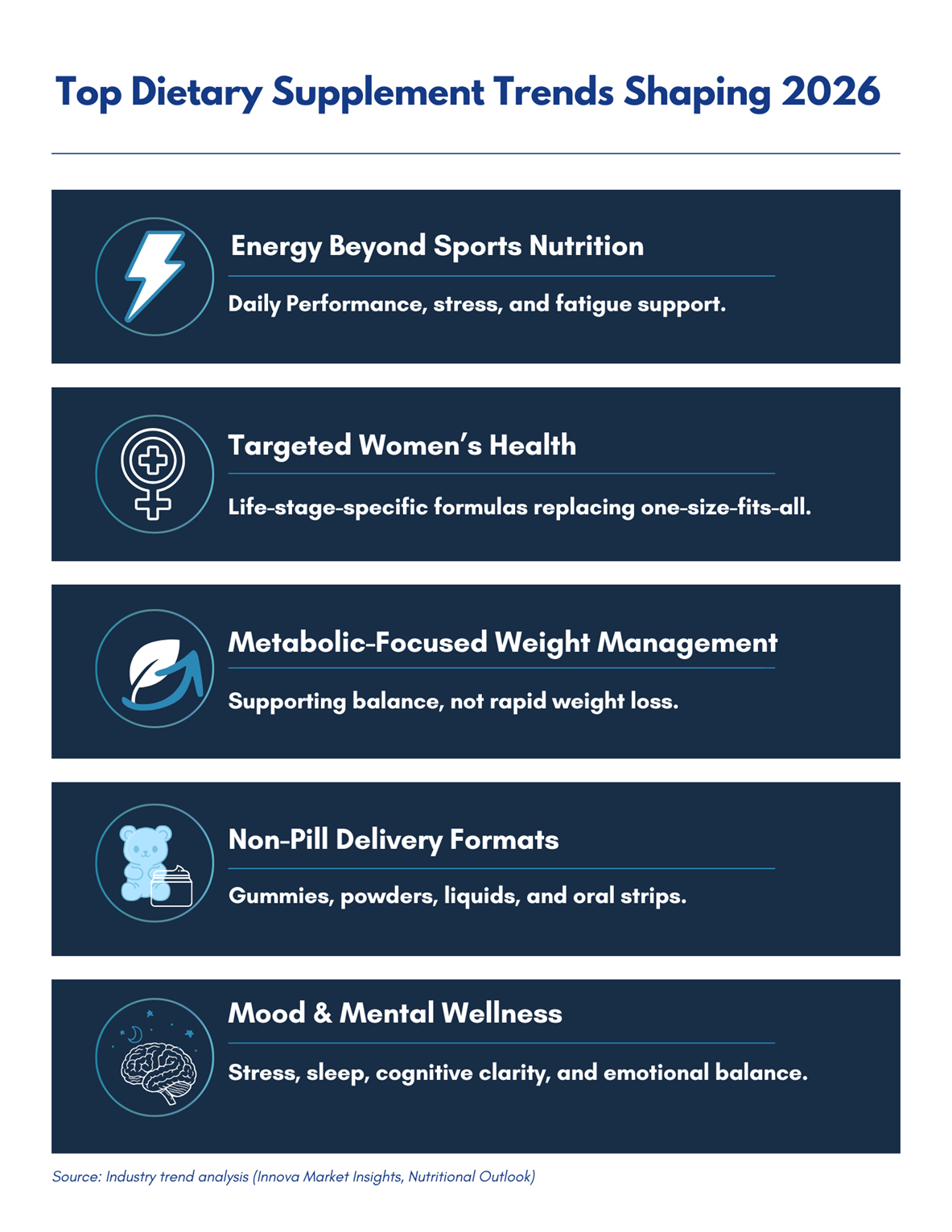
Trend 1: Energy Supplements Are Expanding Beyond Athletes
Energy is no longer just a sports nutrition category. In 2026, energy support is one of the most commercially active supplement segments across demographics — from young professionals to women managing stress and sleep disruption.
Consumer research consistently shows that maintaining energy, supporting daily performance, and combating fatigue rank among the top reasons for supplement use (https://www.innovamarketinsights.com/trends/global-supplement-trends/).
What’s changed is how brands are addressing the issue. The category has split into two distinct approaches:
- Performance-focused formulas featuring creatine and amino acid blends
- Daily, plant-based energy positioned around adaptogens like ashwagandha
Ingredients like creatine and ashwagandha continue to appear on “ingredients to watch” lists for 2026 nutraceutical development (https://www.nutritionaloutlook.com/view/2026-ingredients-to-watch-top-ingredients-and-trends-driving-nutraceutical-product-development).
Manufacturing impact:
Energy supplements frequently combine multiple actives with different stability and blending requirements. Under cGMP, manufacturers must validate uniform mixing, verify potency, and confirm stability throughout shelf life.
Trend 2: Women’s Health Is Becoming Highly Targeted
What was once centered around general multivitamins has transformed into a specialized, science-driven women’s health category addressing hormones, gut health, energy, stress, and longevity. In 2026, brands are developing supplements tailored to specific life stages and physiological needs.
Market data shows continued growth in women’s health product launches globally, particularly in stress, mood, fertility, and menopause support (https://www.innovamarketinsights.com/trends/womens-health-trends/).
Instead of broad positioning, companies are targeting:
- Stress and emotional balance in younger consumers
- Fertility and menstrual cycle regulation
- Perimenopause and menopause support
- Weight and metabolic concerns
This segmentation increases both consumer appeal and formulation complexity.
Manufacturing impact:
These formulas often rely on botanicals and globally sourced ingredients. cGMP requirements mandate validated identity testing, defined specifications, and thorough documentation to ensure consumers are getting what is promised on the label. With market demands from retailers and FDA oversight continuing to emphasize label accuracy and ingredient verification, weak raw material controls in this category can quickly lead to limited market access and regulatory findings.
Trend 3: Weight Management Is Being Repositioned Around Metabolic Health
Weight management remains a significant consumer priority, but the framing has shifted. Instead of aggressive weight loss claims, brands are focusing on metabolic balance, sustained energy, and lifestyle support.
Also with the rapid rise of prescription GLP-1 weight-loss medications, many consumers are exploring these options; however, a significant segment is seeking alternative or complementary approaches rooted in nutrition and lifestyle support. For these individuals, dietary supplements offer a non-drug option that aligns with preventive wellness trends.
Industry trend reporting shows that weight management continues to rank as a major physical health concern globally (Global weight management market trends – recent consumer trend).
Modern weight management supplements often emphasize:
- Metabolic support
- Appetite balance
- Blood sugar balance
- Clean-label, plant-based positioning
This repositioning broadens the audience but increases ingredient diversity.
Manufacturing impact:
Botanical variability presents real GMP challenges. Manufacturers must establish validated specifications, conduct ongoing identity testing, and maintain lot-to-lot consistency. Without strong supplier relationships and process controls, variability in botanical actives can compromise both label accuracy and product efficacy.
Trend 4: Non-Pill Formats Are Becoming the Standard
Consumer preference continues to move away from traditional capsules and tablets. Non-pill formats — including gummies, liquids, powders, and oral strips — now account for a significant portion of new product launches (https://www.nutraceuticalsworld.com/breaking-news/vitaquest-publishes-2026-dietary-supplement-trends-report/).
These formats support the broader shift toward proactive self-care. Their convenience and familiarity make them feel less like a medical intervention and more like a natural part of daily life.
However, alternative delivery systems introduce technical complexity.
Manufacturing impact:
- Gummies require strict moisture and microbial controls
- Liquids demand validated sanitation and preservative systems
- Powders require controls to prevent ingredient segregation
Manufacturers must ensure facility design, equipment validation, and documentation systems match the dosage forms being produced. FDA inspections increasingly focus on whether quality systems reflect actual operational practices.
Trend 5: Mood and Mental Wellness Supplements Continue to Accelerate
Mental and emotional well-being is now central to the self-care movement. Supplements positioned for mood support, stress reduction, cognitive clarity, and sleep quality continue to grow in visibility and innovation.
Brain and mood health claims consistently rank among the top claims in new supplement launches (Top Consumer Health Trends 2025. Consumer trends reveal that).
This category often includes B vitamins, amino acids, and botanical extracts designed to support emotional balance.
Manufacturing impact:
Under oversight from the U.S. Food and Drug Administration, manufacturers must ensure that claims, formulation, and documentation align precisely. Inconsistent potency, overstated and unsupported claims, or incomplete records in this category can quickly lead to enforcement action.
Why 2026 Trends Increase Pressure on GMP Systems
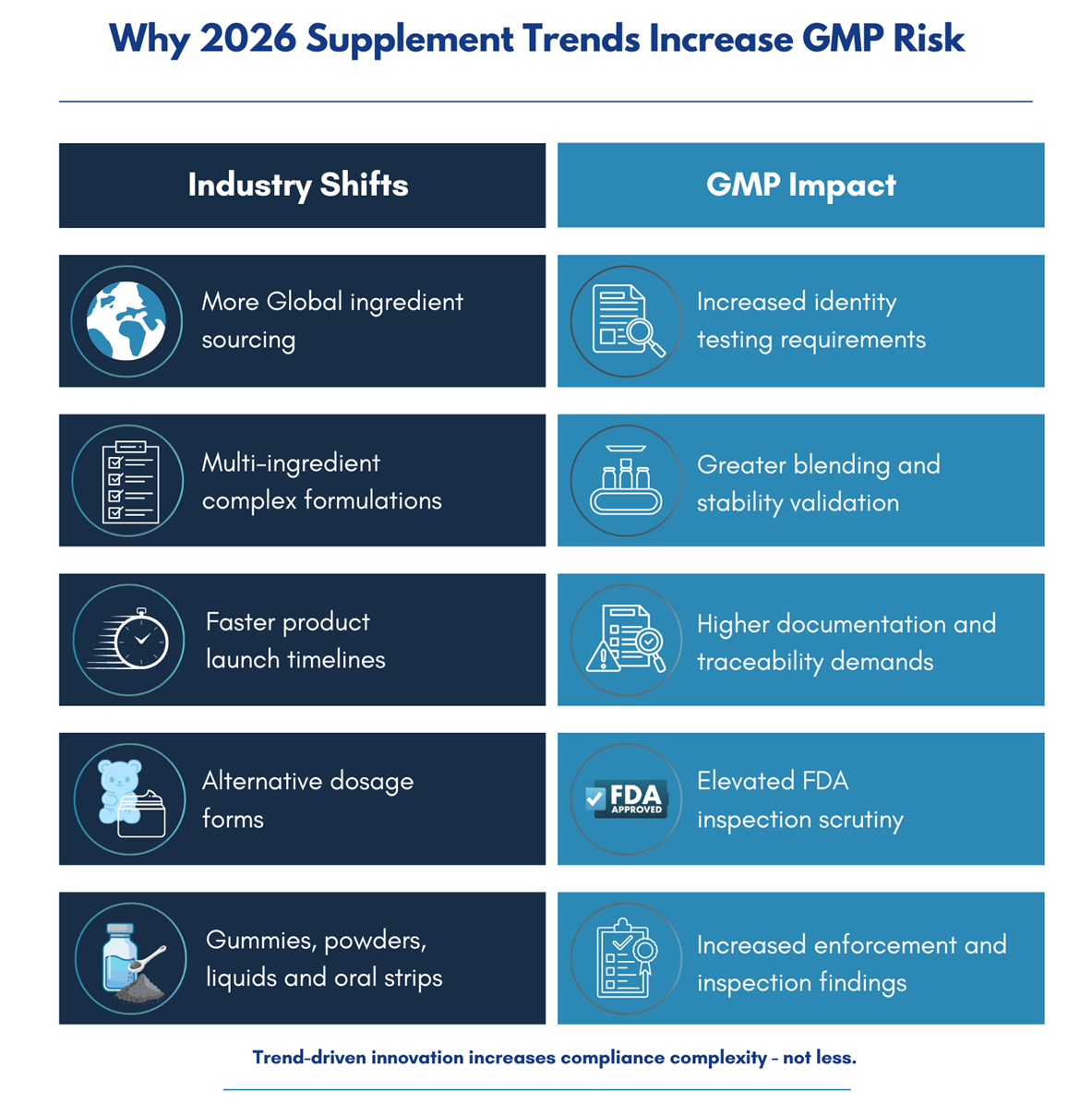
Collectively, these trends introduce:
- More globally sourced ingredients
- More complex multi-ingredient blends
- Faster product launch cycles
- Greater scrutiny around label accuracy
Under 21 CFR Part 111, manufacturers are responsible for ensuring dietary supplements are consistently produced, controlled, and properly documented. For a deeper breakdown of how these regulations apply in practice, read more here: Understanding Dietary Supplement Regulations: 21 CFR Part 111
Labeling requirements, including the Supplement Facts panel, are governed by 21 CFR Part 101 — including but not limited to, sections 101.36, 101.4, 101.9(g), 101.93, 101.14, and 101.17 — which establish the standards for accurate and compliant dietary supplement labeling.
Ready to Align With 2026 Supplement Trends — Without Increasing Regulatory Risk?
Following market trends is only part of the equation. Ensuring your manufacturing processes, documentation systems, and supplier controls meet FDA cGMP expectations is what protects your brand long term and will bring success.
If you need guidance implementing 21 CFR Part 111, preparing for customer audits or strengthening your quality systems to meet growing retailer demands, contact our team today to schedule a GMP compliance consultation.
Contact Us to start the conversation.